
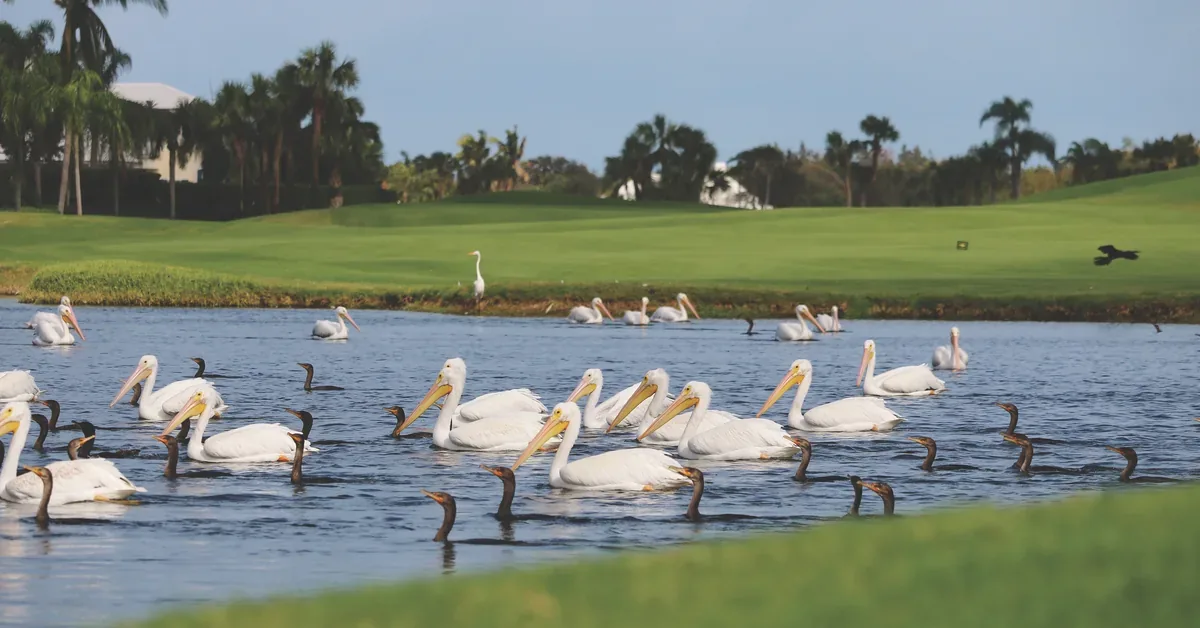

Since first earning Audubon Cooperative Sanctuary certification in 2005, Orchid Island has continued to meet the environmental standards, documentation and review required to maintain the distinction.
2005.
That was the year the Orchid Island Club first earned certification as an Audubon Cooperative Sanctuary through Audubon International. More than two decades later, the golf course remains certified.
That longevity matters because certification is not automatic. It requires a golf course to continue demonstrating environmental practices across six areas, including wildlife and habitat management, water conservation, water-quality management, environmental planning, chemical-use reduction and safety, and outreach and education. Audubon International also requires documentation and periodic recertification to confirm that those standards continue to be met.
So, what does maintaining that designation actually look like at Orchid Island?
At Orchid Island, What Happens on the Course Doesn’t Stay on the Course
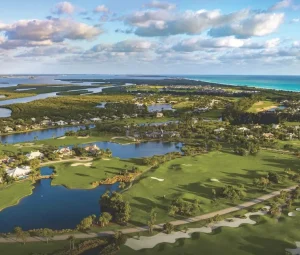
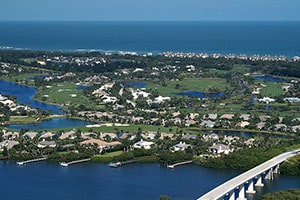
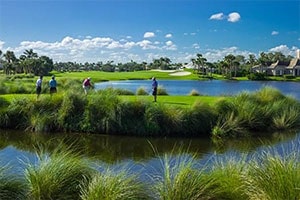
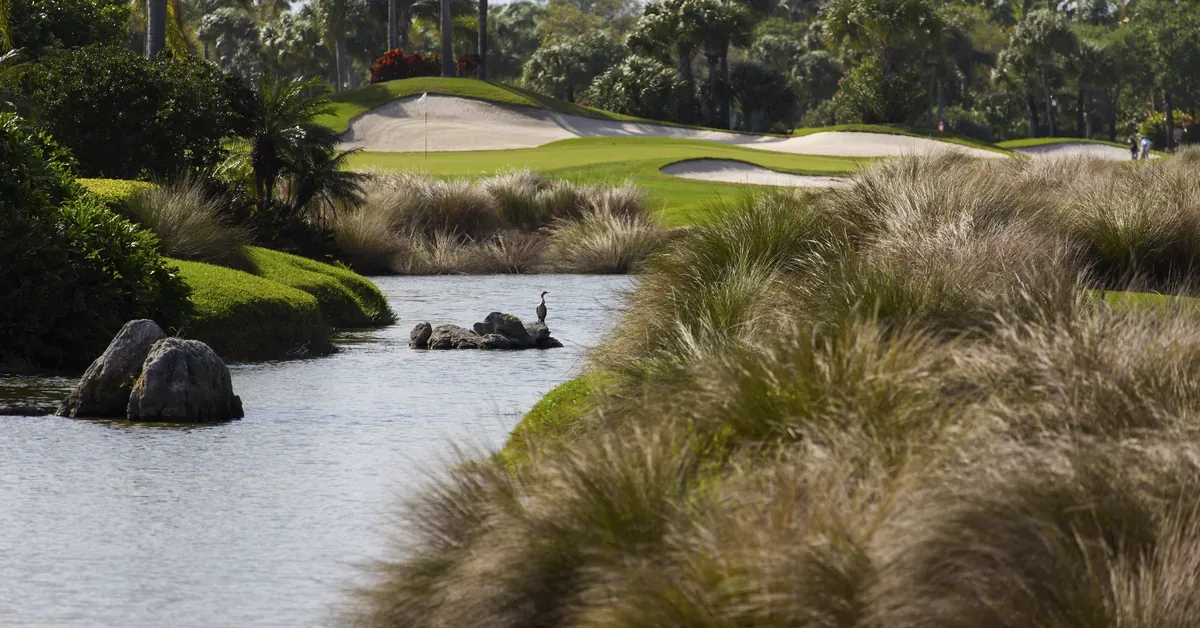
The answer begins with water. The Arnold Palmer-designed golf course is woven through a landscape of ponds and native areas on Orchid Island’s barrier-island setting between the Atlantic Ocean and Indian River Lagoon. During periods of substantial rain, water from course ponds can ultimately move toward the Intracoastal Waterway.
That connection makes golf-course management about more than turf. “The Audubon certification is important to us because we want to keep the waterways clean,” says Rob Tench, General Manager/COO of the Orchid Island Club.
Tench notes that the course’s water attracts birds and other wildlife, including otters, while Golf Course Superintendent Matthew Boyd has overseen practices such as buffers around pond edges, careful fertilizer use and butterfly gardens.
Those measures connect directly to the kinds of standards Audubon evaluates: protecting water resources, managing habitat and considering how routine course maintenance affects the surrounding environment.
Making Room for Wildlife
The wildlife at Orchid Island is not incidental to the certification story. Audubon International specifically evaluates wildlife and habitat management as part of the Cooperative Sanctuary program. For a golf course, that means looking beyond playable turf to the areas that can support birds and other species.
At Orchid Island, ponds, shoreline buffers, native areas and butterfly gardens help create that relationship between a maintained golf course and the habitat around it.
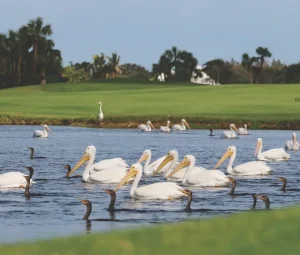
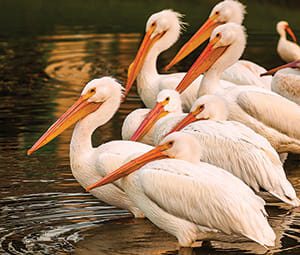
Members may notice pelicans and other waterbirds near the ponds or an otter moving along the water’s edge. Those encounters are the visible side of a larger management approach, one that recognizes that the golf course shares its landscape with wildlife.
Some of the Most Important Work Happens Behind the Scenes
Not every example of environmental stewardship is something a golfer or homeowner will ever see. One of Orchid Island’s documented environmental projects involved an equipment wash-water recycling system overseen by Boyd.
The system was designed to conserve water, separate grass clippings, filter organic contaminants and contain used wash water so it could be reused for equipment cleaning rather than discharged. The resulting system was reported to reduce the potential for pollutants from equipment washing to enter the stormwater drainage system.
It is not a glamorous part of golf-course operations. That is precisely why it is revealing. Maintaining an environmental certification involves more than preserving attractive natural areas. It reaches into the everyday systems, maintenance decisions and operating practices behind the course.
What Does It Take to Stay Audubon Certified?
Audubon International’s Cooperative Sanctuary Program for Golf Courses is built around continuing action rather than a one-time award. Courses work within six environmental categories: environmental planning; wildlife and habitat management; chemical-use reduction and safety; water conservation; water-quality management; and outreach and education.
Certification requires the practices to be implemented and documented. Audubon International can review supporting materials such as wildlife inventories, water-quality information and integrated pest-management records, and its current program requires recertification every three years.
The point is simple: a course does not remain certified merely because it earned the designation years ago. It has to keep doing the work.
The Real Distinction Is Consistency
Earning certification in 2005 demonstrated that the Orchid Island Club met Audubon International’s standards at that time. Maintaining the designation for more than 20 years says something larger about how the Club operates.
It means environmental stewardship has remained part of golf-course management through changing seasons, maintenance cycles and evolving practices. The pond buffers, habitat areas, butterfly gardens, water-management decisions and behind-the-scenes systems are not isolated gestures. Together, they form a record of sustained attention to the place itself.
For a prospective homeowner, that distinction matters because the golf course is not simply an amenity at Orchid Island. It is part of the water, wildlife, views and landscape experienced throughout the community. The birds along the ponds, the native areas beside the course and the water moving through the property are all part of the environment residents live alongside.
More than two decades of Audubon Cooperative Sanctuary certification offers a documented way to understand how seriously Orchid Island has approached caring for that environment.
To explore residences currently available at Orchid Island, visit www.OrchidIslandFL.com or contact Orchid Island Realty at 772-388-3888.